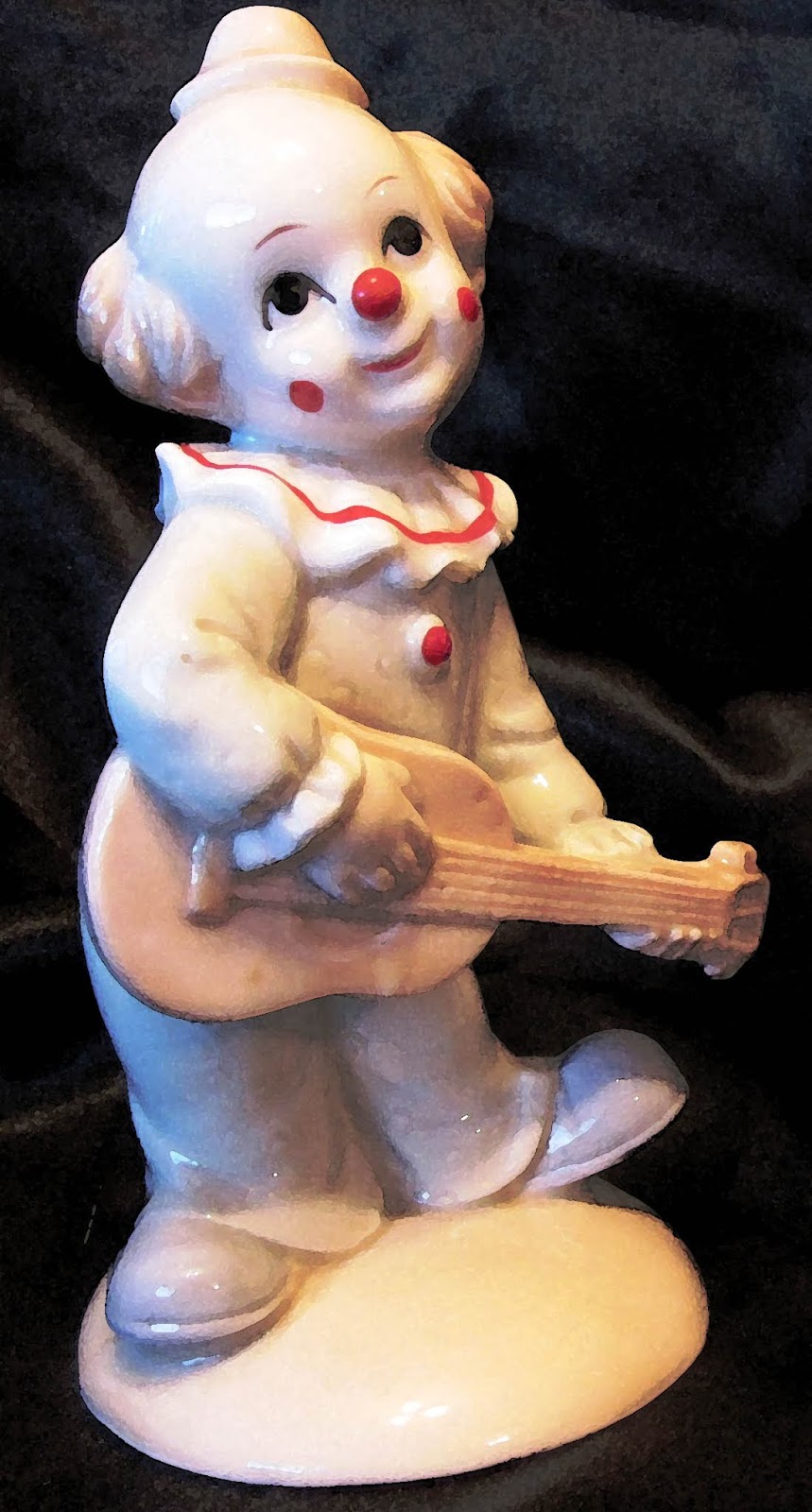
Friday, June 05, 2020

The Time To Love

—Poetry and Photos by Taylor Graham, Placerville, CA


AT THE WOODS LINE

You might take Jake for a clown,
trousers held up with bright blue baling tape.
He’s out there where pasture becomes oak woods.
Fixed a break in the water system and now,
with a length of old pipe, he’s fashioned a flute.
He serenades his sheep; they go about
their browsing without applause. His grandkids
worry every time he fetches a ladder
from the barn, work-belt at his hip, and gazes
skyward. They know better than to talk him
out of it. He’ll find that roof-leak. With his vertigo
of years, they worry. He just talks about Harry,
old friend bedridden for years, making a profession
of opening his eyes and mumbling something
before slipping back to sleep. That kind
of death’s a dead-end job, Jake says, you can’t live
like that. Rather fall off the roof and go flying. 


GRIZZLY FIGHTER’S COUNSEL, IN TIME OF COVID
(Chief Coppa Hembo of the Hill Nisenan, 1812-1898)

These days are bad, but you can survive
bad. Here are the scars
Grizzly’s claws left on my face.
It’s true, a living bear is easier to fight
than a contagion, smallpox in the blanket.
This new virus is tiny but in strength
more massive than Grizzly. You can kill
a bear, though he scars you for life.
This new killer, you can’t kill
nor drive from your village. It knows
no borders. It’s like hate.
It sneaks up stealthy
so you don’t recognize it
for what it is. This
more than ever is the time
to love; to help your brother, your
neighbor, though you meet him
at a distance, masked and wrapped
in protection, as I returned to my village
wrapped in bearskin.
We can learn so much from our wounds. 


SURVIVOR

Without a sound the oregano
migrated. Greek or Mexican? I have
no idea; the tags got lost among green
below the solar panels, above tended rows
we diligently watered. In drought
we forgot the speechless herbs,
we let them die. Oregano would not
die, but crept silently along walkways,
clung to box-corners and where boards
began to warp and separate. You
can’t keep oregano where you plant it.
It’s too vibrant green, and migrant
as something that wants to live. 


I WEED-EAT  (a Sonnette)

With my motor-scythe I cut down the green
soon to turn flammable in summer’s breeze;
spare the blooms that bring pollinator bees,
and try to miss rocks, stumps, hazards unseen.
A mindful task, imagining the fright
of nesting twitterlies and skitterlies—
brief living beasts who breathe in morning light. 


BLACK PHOEBE STOPS TRAFFIC

In these virus days with everything cancelled,
they stopped construction on Greenstone Road
for a bird’s nest. Migratory Bird Treaty says
the new bridge must wait while the eggs crack
and hatchlings wriggle out like worms in straw,
and mother Phoebe goes fly-catching, foraging
to feed her chicks till they feather-out and fly.
Here at home, phoebe sings from high on dead
TV antenna. She hawks bugs from the lowest
twig of a great live-oak, paying me no notice
at all. I praise this everyday small bird who
takes my breath, and leaves me full of song. 


 Buckeye


Today’s LittleNip:

NO MASKS (a Soledad)
—Taylor Graham

Apart from crowds, a peaceful space
of fiddleneck, buckeye and oak—
unseen here, we’re sheltered in place.


________________________________

FORM FIDDLERS’ FRIDAY!  

It’s time for more contributions from Form Fiddlers! Each Friday for awhile, there will be poems posted here from some of our readers using forms—either ones which were mentioned on Medusa during the previous week, or whatever else floats through the Kitchen and the perpetually stoned mind of Medusa. If these instructions are vague, it's because they're meant to be. Just fiddle around with some forms and get them posted in the Kitchen.

Thanks to Taylor Graham this morning for Jake who looks like a clown, for Coppa Hembo and his grizzly bear, for baby birds, and for her update on keeping the weeds cut down on their land! Her LittleNip is in the form of a wee Soledad; for info, see www.writersdigest.com/write-better-poetry/soledad-poetic-forms/. On there, Robert Brewer says that the Soledad is “a Spanish tercet form” that uses “internal consonance”(literarydevices.net/consonance) and “assonance” (literarydevices.net/assonance). Both of these tools are ‘way fun, and some of the heart of poetry, I say.

Taylor also sent us an example of a Canopus (note that the link spells it wrong): poetscollective.org/poetryforms/canapus/:   


BABY BLUES 
—Taylor Graham

Huddled in the nesting box, a mass
of feathers, bills, and black beady eyes.
Seven chicks in a bed of dry grass.
I count them twice, calculate their size—
birds overflowing what the box can hold.
Soon they’ll overfly our summer skies,
blue flashes above pasture’s sunburnt gold.


 Baby Bluebird
—Photo by Taylor Graham


Sue Crisp has sent us a Prisoner’s Constraint, a form which we explored on the very first Form Fiddlers’ Friday, but which is fun to re-visit. Also known as the Prisoner's Restriction, it is a Multiple Lipogram (en.wikipedia.org/wiki/Lipogram). The premise is as follows:

You are a prisoner in a solitary cell. You receive a small piece of paper and a pencil. In order to conserve space as much as you can, you decide to write only using letters that do not extend above or below the line. This means you may use the following letters only: a, c, e, i, m, n, o, r, s, u, v, w, x, z . You can't use the letters: b, d, f, g, h, j, k, l, p, q, t, y . Here is Sue’s smooth example:


SEA SIRENS
—Sue Crisp, Shingle Springs, CA

Orcas, sea sirens en masse, seem curious
as our sea caravan weaves
a scenic course. No cause nor concern.
An azure sea, no snow, 
no ice maze, no ominous aura.                                                                                                                
Orca music, a sensuous
marine croon, in unison.
A newness in our unaware universe.
A commune, a sea murmur
removes our armor.


Here is a very short little nip from Carl Schwartz. Carl likes to make up forms as he goes along, according to how he envisions his poem. This one says a lot without saying a lot:


THE MISSING MAN FORMATION
—Caschwa, Sacramento, CA
 
Electoral College votes—check
MAGA hat—check
Podium and microphone—check
Ability to close umbrella—
Ability to tell the truth—
Ability to lead—
Compassion—


And Joyce Odam sent this poem for her Tuesday post, but I couldn’t resist setting it apart ’til today for its charm about love and poetry. Don't bother to look up "faux sonnet", though. This is just a, well, faux sonnet . . . 


RELEVANCE
(Faux Sonnet)
—Joyce Odam, Sacramento, CA


This simple poem,
trying to be
a sonnet—
reduced to groping
for words—
any words
—wanting to be
eloquent, but failing—
masquerading
as what it’s not.
Oh, listen—
listen to me,
telling you
this secret . . .

and this next one
—never resolving,
never resolving,
caught in mirror—
caught,
held captive
in doubled light, enamored.
You hear me, see me,
now we can
love—self and each other.
This is not the first time—
so guilty of love.
Now skim the light for texture.
I am here.

_____________________

So there you have it! Another action-packed Friday with the skill of Taylor Graham and the fine music of all these fiddlers—a fun-tastic way to start June, indeed!

—Medusa


Chief Coppa Hembo
—Public Domain Photo


Photos in this column can be enlarged by
clicking on them once, then clicking on the x
in the top right corner to come back to Medusa.

Thursday, June 04, 2020

Finding Your Own Way

—Public Domain Illustrations
—Poetry by Linda Klein, Los Angeles, CA


THE CLOWN

A clown slathers his face
with white, shiny goo.
He covers it all.
They won't have a clue,
lines from fatigue,
and pale, sagging skin.
His sadness is hidden within.
He draws happy eyes, free
from life's woe, wide with surprise,
they sparkle and glow.
Then there's the nose,
a bright red bulb, shiny
as if he had guzzled a bottle of wine.
He had, in fact, put down a glass or two,
and that was perfectly fine.
Some blush on his cheeks
to make him look merry.
It's what the crowd seeks and desires.
Rouge them like berries!
A large, laughing mouth
curved at the corners.
So red, wide, and round,
it would coax out a giggle from mourners,
mourners—like him.
A loss from which
he will never recover.
She was his reason to live
and his lover.
He shouldn't be here,
feeling so much a fool,
putting on a false face,
soft brushstrokes to hide a tear pool.
Hah, hah!  Finished at last.
He fluffs his ruffled collar.
His floppy black shoes flap jauntily
out to the stage on cue
as his waiting audience
applauds and hollers,
for this is what clowns
are expected to do.


IT LISTENS, ACCEPTS

Absorbs, but never utters a word,
it must trust, be content just to receive
a luxurious splatter of butter,
a thick layer of cream cheese, or mayo
spread over its pale, often charred,
porous face, which brightens with
any additions and leaves
expressions of pleasure
to its garrulously grateful eater.

Dipped into a sloppy soup or stew,
how can it help but be torn with emotion?
Yet it maintains its calm appearance.

At times it joins with another
to deliver a delicious protein filling,
neat, practical, and transportable,
that will sustain and satisfy.
It is the staple, silent conveyor
of nourishment, and basically
sensible roughage, ethereal bread.


ELEGY FOR ANTONIO GONZALES

Convivial Sr. Gonzales taught first-year Spanish
at West Los Angeles College.
I remember his warmth and his honesty,
his pride of family and heritage,
his need to tell who he was and what he had suffered.

Antonio Gonzales was a Cuban refugee
who had fled Fidel Castro's regime.
A journalist in his native country,
Gonzales could write nothing but the truth.
He wanted to warn his countrymen of the evils
perpetrated against them under Castro's rule.
He longed for freedom and democracy for all Cubanos.

Gonzales' admired older brother, Alejandro,
a lawyer and activist, had been murdered;
his body never recovered, he became one of
"los desaparacidos," the disappeared ones.
Soon Antonio became the subject of threats against his own life.

One morning Antonio kissed his wife and children goodbye.
He left Cuba not knowing if he would ever see them again,
to begin a lonely life in Los Angeles.
Finally, after four years, they were able to join him.

Gonzales found employment teaching
the flowing, romantic language of his homeland,
not just the words, but the culture, ideals, and ideas.
I was fortunate to be one of his students.
I recall to this day, his handsome, smiling face,
his brave story, and his belief that we must
love all our fellow human beings as familia.
We were encouraged to share our stories as well.

He arranged class parties where we tasted
plantanos, flan, and other Latin treats, and
we brought foods from our own cultures to share.
One evening his daughter, Maria Alicia, attended a party.
Alicia called him Poppy.
After that we all began calling him Poppy.
He didn't mind.  He loved being a father figure to us.

One day I noticed a bump on Poppy's brown forehead,
lifting his worry lines, and asked him about it.
He replied that it was nothing to be concerned about,
but his normal joviality was gone for a while.
I shouldn't have asked, I thought.
He saw my expression changed and he teased
that an alien was hiding under his skin.

"An illegal alien?" I asked.
Poppy laughed and called out "Hotchis?"
meaning, "How did you guess?"
It was one of his stock replies that
never failed to make us giggle.

Months later, after our class ended,
I learned Poppy Gonzales died
from skin cancer that began
with a lump on his forehead.
He was only fifty-two years old.
My first thought was that now he could
never return to his beloved Cuba
to live there en liberdad.
I hoped that his children would return
one day and spend time there in
remembrance of their Poppy and ours.


THE GREEN REPORT

When I was young, I saw the world in vibrant shades of green.
Abundant verdant forests kept our air fresh and clean.
There were moss-covered tree trunks, dew-dappled leaves
in emerald hues that sang from budding bushes,
and echoed in silver-green streams.

Crashing waves sprayed green seafoam
in clear waters, where lively fish swam and spawned.
Green provided nourishment with vegetation,
symbolized renewal, epitomized continuation.

Through the years of our existence on earth
we have neglected conservation inhibiting green's rebirth.
Hot weather and lack of rain brought devastating fires.
Shriveled and dull, once wondrous woodlands
have dwindled, far from full.  Moldy, mildewed, wasted
with decay, the greens I see today are tinged brown and gray.

Green no longer sings.  It sulks.
The Jolly Green Giant is so defiant,
he's become the Incredible Hulk.


FRANKIE’S METHOD

I remember a cartoon—a funny little man
kicked himself repeatedly in the rear end,
an awkward exercise indeed.
He had to hold on to the back
of a sturdy chair, so as not to
fall forward on his face.

"What're you doin', Frankie?" asked Willis,
who feared for his friend's sanity.
"I'm givin' me mind a 'oliday, you old codger."
Frankie explained.

"It's a way to take me mind off me problems.
I kick meself in me arse until it 'urts, and
then whatever was worrying me
doesn't matter at all.  Things resolve
themselves one way or t'other…
We must all find our own way."

Frankie's way does not suit me.
I'm not keen on inflicting pain on myself,
and were I to use his method, I would have
a great deal of trouble sitting down to read or write,
which is what I do to escape from my worries.

Curled up in a comfortable chair, I enter another world
and live there for a while, just long enough to forget
what was bothering me.  Poor Frankie, he did teach me,
everyone must find their own way.

____________________________

Today’s LittleNip:

In a gentle way, you can shake the world.

—Mahatma Gandhi

____________________________

—Medusa, thanking Linda Klein from L.A. for her fine poetry today!

Tonight, 8pm, Poetry in Davis presents Poetry Tonight with Myah Daniels, Jorge Quintana, and Angela James on ZOOM. To participate, visit ucdavisdss.zoom.us/my/andyojones at 8 PM, or a few minutes before, if you wish to chat with the host and the other attendees. Info: www.facebook.com/events/543814299625894/?notif_t=plan_user_invited&notif_id=1591197721435375/.


"...in emerald hues..." 
—Public Domain Photo


Photos in this column can be enlarged by
clicking on them once, then clicking on the x
in the top right corner to come back to Medusa.

Wednesday, June 03, 2020

Hinting of Nijinski

Vaslav Nijinski
—Public Domain Photos 
—Poetry by Tom Goff, Carmichael, CA 


ELGAR, THIRD SYMPHONY (completed by Anthony Payne)
(First Movement)

Not “pomp or circumstance,” but war itself;
a glowering theme, dark. Satirized plainchant.
The work, unfinished, demands full life, off shelf,
back under the seething pen that scrawls descant.
Now, second theme, almost inversion of
the fallen-angel diatonic start,
chromatic lyric wrangle, pressed under love,
mortality, God knows what else daunts all art.
Such air-suspended leaps hint of Nijinsky:
soft cloud-supports detain the danseur’s fallback
to stage planks. Yet of Classic iconography:
Greek limb-versus-limb in-thrustings, isometric.
(Tod Handley, how he unleashes fiery sound!
Yet each orchestral segment holds firm ground.)


FINLANDIA

Symphonic poem or festival tune or hymn,
Melodic, forthright, last cadence oblique (say “plagal”),
Foam just above the cup’s lip, not over the brim.

Sung worldwide—surely the impulse isn’t all whim?—
At Finnish concerts, Latvian funerals,
Symphonic poem or festival tune or hymn,

Composed by Sibelius, whose mood swings ran
swan-flight or grim,
Trolled out by Karelian choirs at festivals,
Foam just above the cup’s lip, not over the brim.

Finnish to the last unshrunken glacier’s rim,
Sing granite, sing lingonberry, sing Kalevala,
Symphonic poem or festival tune or hymn,

Sinew to crack Lemminkäinen’s toughest limb.
From one cliff’s flow (whether slow or swift intervals),
Foam, at the ravine’s edge, never runs over the brim.

Can you hold your ale penned in with such a prim
Black-suited Helsinki citizen? Prim, not small:
Finlandia, tone poem, festival tune, or hymn,
Not once does its head of dark foam spill over the brim.


INTERIOR WIND

The makeshift curtain
at the kitchen window
stirs and swells with a strange
impetus, afflatus. First
uncertain, I then
attribute its odd ballooning,
its thin glow,
to no breeze on which it
could lift, sway, seize, but 
to the air conditioning’s
unthought-of prank, that afflatus
to interior wind.

Imagine us among
those who first ate
Jesus’ body. Soon, late
to protect one who, anyhow,
could self-resurrect, it burst
on us that He now ate us,
dissolving us, though from outward
till, resolving in us, went out Word
we found we spoke
in tongue-crawling tongues,
falling in, each,
with strange new speech, as if
playing along with a joke but,
all the while never more stung
to stay strong yet give and give
from new spirit cyclones inside us,
at the same time alongside us.
“Divine afflatus?”
Interior wind.

Good Friday, 2020


READING “JACK STRAW’S CASTLE” (Thom Gunn)

Jack brags of houses, visionary rooms
That seem, when read of, popup books,
            but crass.
Bare half-lit spaces. Floorboard creaks. Now booms
—from shotgun metal? No; shoe-leather tread.
Rooms webbed with reminiscences whose hooks,
Not sharp delight and yet not strictly dread,
Latch onto brain cells vacant as monks’ cells
Or turret-shapes missing stones, parched summer wells,
And cram them: cotton batting grey as grass
Drought-stained with burnt tobacco ash in dreams:
Nothing of whiteness brighter than dull beige,
            or creams
Whose textures promise the palate pudding-taste
But crumble on the tongue to grit and paste.
Tongue of Jack, stuck, with one click retracts;
A dry, dry stutter, matter-of-fact cluck
Then inside-the-cheek poke of reassessment,
From below-roof high to here then down below,
            where there’s a basement,
Stanzas Jack may have hoped were wrought
As “chambers of maiden thought.”
Jack’s tongue flicks itself free; then again caught.
Where do his dreams come from?
From mind? From deep in a body’s central drum?
Furnace and kitchen, brackets, pipes, and drains,
            the infrastructure
all pulsating layers that radiate from his grey brain,
He wonders what he’s bought. 


THOM GUNN’S MOTHER: END OF INTERVIEW
(see “An Anglo-American Poet: Interview with Jim Powell”)

Mina Loy is my mother,
you’ll end by having me say.

[Powell: There, that’s an idea.]


Strange to shut off the recorder,
Thom Gunn speaking as stark as that,
albeit not said flat, but
with a smidgen of laugh.

Words uttered just half in jest:
that sore term for him, “my mother.”
Mina Loy, poet oft read, never met?
Save in some first incarnation, or other,
parallel life or parallax lens-look.

What we now know: the “Grecian” poison fife,
“oaten stop,” transverse or end-blown
monoxide flute of “The Gas-poker,”
the poem concisely choral
—manner tragic, but no less pastoral—
of his mother’s suicide, was a flute
tune, then, by this late-in-life,
a poem written down.

The brothers, Ander and Thom,
are boys in it,
witnesses to a poison-fit’s
aftermath. The passing of Mina Loy’s
dust-choked satellite
from the night’s plenilune
to slowly thinning day moon,
finds them both immersed in and emerging from,
changed by the numbness, the shock.
The mother’s red-robed frame
in transition to rigor lock.

The verse resteeps older Thom
young in the death experience:
eyes clear, not one whiff prurience.
He picks up the gas-poker flute, he fingers the stops,
then stops. She sucked at it, harmonicalike,
—face permeated blue? Monoxide red?—
till penetrated lungs-through,
as a wren might be by a shrike.   

“The smallest ears in London,”
he writes elsewhere, were his mother’s.
You notice in photos Gunn’s ears
tend to the large, not small,
but if at all
hers, in how they’re keen;
cut through conversational sheen
and subterfuge. Even Fort Point’s
“Third System” thick walls
would turn permeable veneers
for Gunn’s twin satellite dishes.

He emerges from interview
with a jest captured for the page.
Mina Loy, his new mother,
as might a sardonic she-mage,
enciphers the arid moon,
late delivery of her boon
in his bon mot, disclosing the rage
that clinches the throwaway line,
the as-yet-unstepped-on mine.
 
______________________

Today’s LittleNip:
 
SEXUAL NEW JERUSALEM
—Tom Goff
            (reply to "The 1970s": epigram by Thom Gunn)

Revealing while unrevealing: the metric from good old bad Kipling.
Idealists, friends not yet lost, smoked weed, amorous muscle rippling.

_____________________

—Medusa, thanking Tom Goff for today’s sonorous thoughts on music, poetry, and those “spirit cyclones inside us”.

For more about dancer Vaslav Nijinski, go to dancemagazine.com.au/2016/09/vaslav-nijinsky-a-historical-profile/.


 —Public Domain Photo Courtesy of Joseph Nolan, Stockton, CA


Photos in this column can be enlarged by
clicking on them once, then clicking on the x
in the top right corner to come back to Medusa.

Tuesday, June 02, 2020

In Some Dream Together

The Clown
—Poems and Photos by Joyce Odam, Sacramento, CA


FROM THE CARNIVAL OF DAYS
AND NIGHTS

The clown arrives with his black mask
and signature; he will amuse
with his pointed humor,
wait for the laughter—
who knows him?
who asked him here?
the audience
propped in chairs—
his puppets—
he dances,
he juggles,
he rolls on the floor
to make the spotlight follow him,
he offers the flourish of his autograph
to the first one who finds him funny.
The audience cannot laugh or applaud.


(prev. pub. in Medusa’s Kitchen, 8/10)

_____________________

THE OUTDOOR CAFÉ, LATE SUMMER, 1914
After Soir Bleu—1914 by Edward Hopper

Clown sits in nonchalant solitude at the outdoor café in
late summer with lanterns overhead and a sulky woman
approaching. Perhaps they know each other.

Clown has an unlit cigarette in his mouth. He stares at
a bottle and a glass. His hands are folded. Perhaps he is
late for a performance and is loath to go.

Perhaps the others have not noticed him as the woman
has. Her eyes are dark and haughty. She pulls her
shoulders back.

Clown still has not seen her. He seems morose. His
makeup is still fresh, his white costume shrill against
the blue distance behind him.

Suddenly all the tables seem to lift in a mottling of blue
light. The lanterns shift and the woman hesitates behind
his chair.

Clown does not turn around but continues to frown down
at the table—a nearby woman turns to speak to her com-
panion who stares beyond her to the sultry

woman and the clown who seems absolutely removed
from everyone and everything—though everything is
brimming softly around him.


 The Edge


HIS COUNTENANCE

I saw him first on a street of masks.
His eyes were the tortured eyes
of the self-gone mad.
His was the face
of a worshipper
of sad,
and sad beyond sad.
I loved him
at once.
His flesh was stone and his eyes
were dead. I took him home and
put him to bed by the window light
that shone and shone upon
his countenance.
I could not stand his beauty then.
My love for him was not
my own,
nor his.
I should have left
this love
alone.
I should return to where
I let some fatal yearn
play hard with me, for now I own
his misery whose name was love.

__________________

TURNS OF FATE

And we were young and bent on suicide, but friends
dissuaded us—took our hands and ran us along the
beaches—all summer, teasing the waves and watching
the white gulls come down among us—as if they were
tame. But these are lies, of course. I need your attention.
I need you to hold me from what might have been true
if I had known you. Is that why we had no faces—only
those white masks—stark and featureless so no one
would know us, though we cried to be known; is that
how we became anonymous? Where were you then—
my imaginary one—were you on your way to important
appointments—famous and aloof—could I have
touched you?


 The Mirror


THE WALL MURAL

Muraled here for contemplation—or discovery,
whichever is moot—aside from the paleness,
rendered theatrical and sad—with curling

white ribbons—floating—catching on snags
and corners—the faux surface peeling through
the under-painting (the past?) a staircase

and a fence and one high window showing
through. Alongside the largest tear, a clown
and maiden who seem to have gotten free of

the curling picture, standing awed and tentative,
still in costume, not knowing what to make of
change and loss and stunned by circumstance :

How long has it been? Where are they? And
who? And how do they just step from there
into real existence with the night door closing,

its familiar shadow easing over them once again. 


 The Soloist


TRAGEDY AND TRAGEDY, FADING-OUT
After Carnival Evening by Henri Rousseau

Where are we now but in some dream
together, emerging a dark woods—

two mimes in white costumes,
wandering through a night-sketch—

late of a country carnival
(how long ago)?

displaced by time, perhaps,
the winter-stricken trees already lonely

for our presence
as we slowly diminish—

two cloud-wisps emulating us—the cold
and following white moon about to weep.


 The Understudy


SACRIFICE

If ever we are sent to guard the stark
un-calibrated dark
let’s use a blindfold to enhance the task—
a simple penance mask—

that none may view our features with concern
and we, thus masked, in turn,
may never look to pity for disguise,
but tantalize our eyes

to beauty that was coveted and lost,
and love’s sad cost,
and only trust the darkness that can hide
all anguishes inside.


 The Ventriloquist


Today’s LittleNip:

THE OLD VENTRILOQUIST
—Joyce Odam

Handsome for a moment, doubled in the mirror
behind him, still in his straight-man costume,

he stares away from himself. His famous profile
shines in the light from a stage, which is empty.

Two puppets rehearse the pathos of their lines.
They don’t want to lose him.

__________________________

Our thanks to Joyce Odam for clowning around with us today, as we continue to try to brighten up the world by talking about the vivid colors and goodwill of the clown, our recent Seed of the Week.

Our new Seed of the Week is Pockets. Send your poems, photos & artwork about this (or any other) subject to kathykieth@hotmail.com. No deadline on SOWs, though, and for a peek at our past ones, click on “Calliope’s Closet”, the link at the top of this column, for plenty of others to choose from.

For upcoming poetry readings and workshops available online while we stay at home, scroll down to the blue column (under the green column at the right) for info—and note that more may be added at the last minute.

__________________________

—Medusa


 —Public Domain Illustration


Photos in this column can be enlarged by
clicking on them once, then clicking on the x
in the top right corner to come back to Medusa.

Monday, June 01, 2020

Send In The Clowns

—Public Domain Photo
 

THE REAL DEAL
—Sue Crisp, Shingle Springs, CA

What if this COVID is just a bad dream?
I'll wake up from in a state of disorientation,
not knowing the REAL from the FAKE news?


In the dream world. it's making clowns of us all.


In the real world, it's not clowning around.


—Public Domain Graphics Courtesy of Sue Crisp

 _______________________


 Shelter in Place
—Photo by Cynthia Linville


28 SECONDS
—Cynthia Linville, Lincoln, CA

The future runs up and
pushes you from behind
and you tense
every muscle
into stillness
because you know, now,
nothing will ever be the same

And as you stumble forward
you start counting
on your fingers
every single thing
that has ever gone wrong,
looking for that one thing
that could have been different

But this madness envelopes you
like wet cotton wool
hot and sad
and (in self-defense)
you fall backwards
into yearning
hoping to find the past in your sleep

And you wake up
savoring a breath of sweet relief
but it evaporates
in the scalding glare.
You wake up talking to the dead
but you no longer believe
they can hear you.


 Joshua Tree
—Photo by Cynthia Linville


Every heartbreak begins somewhere—
a hairline fracture 
splitting open
every cherished word

spaces
gap

sentences
dissolve

hard truths
crumble
disintegrate


—Cynthia Linville


 Tower Lion
—Photo by Cynthia Linville


The past is a place
harboring trains that go to nowhere

saturated shadows
flashing over scorched banks

a place where grief-colored smoke
extravagantly unspools

echoes amplifying
until your ears ache


—Cynthia Linville


—Public Domain Photo


RORSCHACH TEST
—Caschwa, Sacramento, CA

what are we to say
about this world we live in?
only perceptions

believers shelter
at home while deniers flock
to public places

we pay to hear an
orchestra play symphonic
works from folks long dead

who are not ever
reborn to raise their baton
and keep things just right

but “experts” spout out
their conclusive opinions
on how to play it

maybe untrue to form
says less about the doer
than the audience

here in this poem,
Haiku’s correlation to
nature is not found

does that mean it’s lost?
will someone put up money
to help get it back?

and that, my friends, will
conclude perceptions; want more?
get your own ink blot


—Public Domain Photo


JUST OLDER
—Caschwa

deep thoughts
seriously
may require bending down
far enough to touch honesty
by hand

will it
cry out in pain?
or is that just your knees
distorted and maligned for years
stop it

if this
becomes more than
a mental exercise
you will have to sign a formal
release

and then
we can begin
to delve way down into
that mire of memories you hold
so dear

we have
broken the ice
gotten under your skin
but we did not find much to share
keep it 


—Public Domain Photo


WHATCHA WANNA BET?
—Caschwa

The top
stakeholders of
the companies that rank
highest in environmental
abuse

hire a
crew of people
to keep their own dwellings
immaculately clean and pure,
then boast

***

a high
percentage of
proud claims that “it is not
about the money” are in fact
ALL lies

***

it has
been said that we
poets do not get paid
much, as if that was our only
true goal

***

our dog
lost its driving
privileges due to
being ninety-eight years of age
too bad 


 Clown Convention in Mexico
—Public Domain Photo


SO DANCE
—Caschwa

dancing naked is not out of your league
means to become certifiably clean
whether beaches, warm, or private clubs, mean
allemande, courante, Sarabande, and gigue

those shiny barbells you see at the gym
are bare bells for cleaning all of your parts
so drop everything and dance, limb to limb 


—Public Domain Photo


HARD TIMES AT THE CIRCUS
—Kevin Jones, Elk Grove, CA

There is moaning
Down on Clown
Alley. There
Is always
Moaning down
On Clown Alley.
This time
It's for real. 


—Public Domain Photo


Even pediatric doctors have failed at getting McDonald’s to permanently “retire” its clown mascot, Ronald
   The clown has been seen going into public schools to promote kids to consume its unhealthy fast foods 
   Since 1963, the clown has been especially used to advertise McDonald's during kids’ Saturday morning T.V.
   McDonald’s grinning icon keeps "creeping on" despite the plague of American childhood obesity
   Like Mickey Mouse presents Disneyland as “The happiest place on earth”,
   Ronald McDonald attempts to present for its restaurants the same kind of fantasy
   Especially with the golden-arched “McDonaldland” children's playgrounds
   Despite the fact that McDonald’s workers are probably by no means as happy as Disneyland's  
   Such as a beaten-down, tired teenage Asian girl I encountered taking orders at a McDonald's drive-through window
   She said “Welcome to McDonald’s” in a tone she might have told me to go fuck off
   And I let her keep the change as a tip ‘cause I couldn’t blame her
   Indeed, I have been always at odds with the fast-food chain while hating its wicked clown mascot  
   Ever since I recall I even won a coupon as a prize for a grade-school writing contest sponsored by McDonald’s


—Michelle Kunert, Sacramento, CA


—Public Domain Photo


There’s a singing “clown" who appeared on America’s Got Talent two years ago, calling himself “Puddles Pity Party”
   Perhaps you've seen further performances of him; he’s posted online and on YouTube
   Frankly my feelings are that “Puddles" needs to drop the “creepy clown” appearance—
   He wears a puffy white, black-trimmed outfit like that of murderous psychopath, Canio, in the Italian opera, Pagliacci
   Surely this guy could come up with some other dark character or persona to sing under
   His thick clown make-up appears to be too much of a mask of expression and emotion on his face
   And one has to wonder what is he trying to hide under, if he is really a conscientious person


—Michelle Kunert


—Public Domain Photo


THE VIRUS HUNTS FOR BALLOONS
—Joseph Nolan

The bungee-cords between us
Are all frayed,
The ones that linked us up
And prevented our falls
From distant horizons,
Previously known only
To imbeciles,
Who wandered off, alone.

Some have given up making
Whatever it was they made.
I, for one,
Have stopped making scones.
I am reverting to something
I abandoned long ago: doughnuts!
Pretty soon, if this keeps on,
We will all turn into balloons
That blow away.
The virus is hunting
For balloons, they say.
Something hot and fat to pop! 


—Public Domain Photo


WHEN SOUND MEETS A VACUUM
—Joseph Nolan

What are the trans-ramifications
Of sounds in air
As they meet
The vacuum of space?

They say that sound needs matter
To vibrate through
In order to move,
To continue its resonance,
But vacuums, also, know
The sounds made on planets,
The meanings of words,
The feelings of cries
Like sounds passing through
Walls in cheap motels.

I know they do not die
When they drop off all matter
Into the vacuum, outside,
Cream on the surface of milk.

And I sit here, empty,
As though there were a vacuum within,
Waiting for something
To buzz against my outside wall. 


—Public Domain Photo


IN LOVE WITH SIZZLE
—Joseph Nolan

We’re in love with sizzle,
Beauty, charm and grace.
We prefer these things
To talking
About natural space—
About the steak, itself,
The gristle and the bone,
Since we are never satisfied
With being alone. 


—Public Domain Photo


SEASONAL DELIGHTS
—Joseph Nolan

It’s all right
If you prefer
Persimmons in December
To cherries
In late May;
Who’s to say
Which are better?

But I know,
When gorging
On red cherries,

That golden apricots
Are coming soon,
Before the end of June.

And cherries, red,
Beneath green leaves,
Against blue sky,
Tell me it’s time
For joy in summer,
And that luscious raspberries,
Are coming, coming, coming,
Coming, soon!


—Public Domain Photo


YOUR ATTENTIVE FUTURE
—Joseph Nolan

The future listens
To hopes, worries,
Desires and fears
And says,
“I am here.
I am waiting
For you to grow near,
Each, to your own fruition,
To the inevitable manifestation
Of your destiny.
It is here with me,
Your future!”


—Public Domain Photo


Today’s LittleNip:

COWBOY’S TOMBSTONE
—Joseph Nolan

On a cowboy’s tombstone,
In granite,
It read,

“Three pats of butter
and a slice of white bread.
That is what it comes down to—
Everything you said and did.
Don’t let go of your vision,
Since when you are dead,
All you can leave behind is
Three pats of butter
and a slice of white bread.”

_______________________

Thanks, poets, for today’s potpourri of poetic ponderings, including riffs on clowns, our Seed of the Week. Well, as Caschwa says, “So Dance”!

Here in our area, Sac. Poetry Center uses Zoom for weekly readings and workshops. For more info, go to www.sacramentopoetrycenter.com/:

•••Mon., 10am: Writers on the Air hosted by Todd Boyd: RSVP in advance via email to writersontheair.message@gmail.com. Zoom link: us04web.zoom.us/j/358106078?pwd=YzdvelcxOW1CNWg2YnBuc05ZYUJaQT09     (Meeting ID: 358 106 078/Password: 025674)

•••Mon. 7:15pm: SPC Monday Night Poetry From Coast to Coast. Zoom: us04web.zoom.us/j/7638733462 (Meeting ID: 763 873 3462 ["P O E T R E E I N C"] Password: spcsdv2020)

•••SPC Tuesday night workshop hosted by Danyen Powell: Bring a poem for critique: us02web.zoom.us/j/346316163 (Meeting ID: 346 316 163)

•••Wed., 6pm: MarieWriters workshop (prompts) hosted by Nick LeForce: zoom.us/j/671443996


Also this week:
•••Fri., 7:30pm: Video poetry reading on Facebook by Davis Poet Laureate James Lee Jobe at james-lee-jobe.blogspot.com/.

For more about El Dorado County poetry events, check Western Slope El Dorado Poetry on Facebook: www.facebook.com/ElDoradoCountyPoetry/.

For other upcoming poetry readings and workshops available online while we stay at home, scroll down to the blue column (under the green column at the right) for info—and note that more may be added at the last minute.

And to see the reasons that Mickey-D’s dropped poor Ronald, go to www.mashed.com/202684/the-real-reason-mcdonalds-got-rid-of-ronald-mcdonald/.

_____________________

—Medusa, still dancing ~ ~ ~


Photos in this column can be enlarged by
clicking on them once, then clicking on the x
in the top right corner to come back to Medusa.