Monday, March 21, 2016

Green

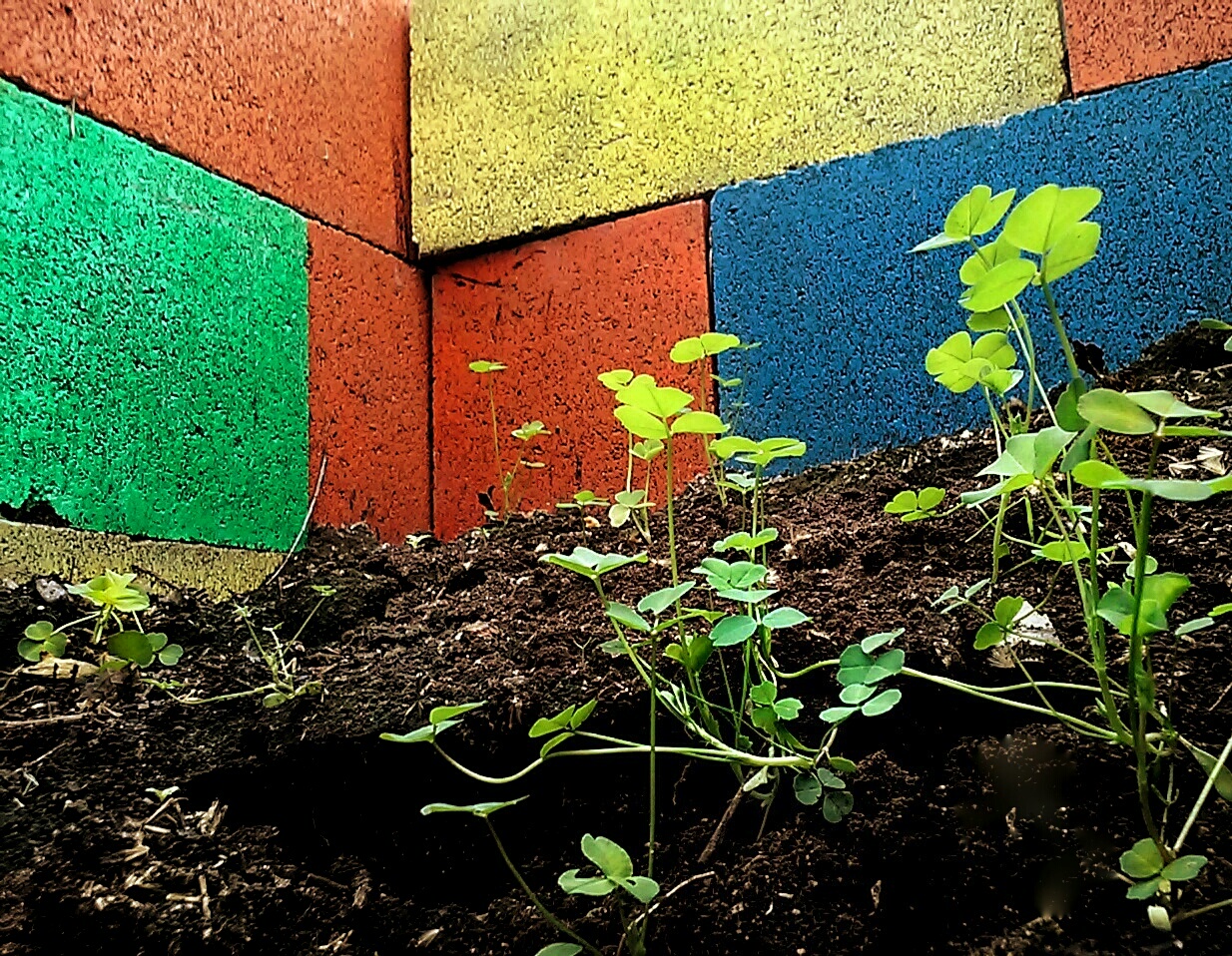
Many Greens
—Photo by Taylor Graham


JUST GREEN
—Taylor Graham, Placerville, CA

Too spring-early still for pied colors—
butter-yellow cups and purple vetch,
lupine in every shade of sky. The fields
are charged with green—dewy clumps of elf
umbrellas, chickweed sprays spiked by
tiny stars. Mottled mosses on oak

open-mouthed to catch the last raindrop
joining just-sprung rivulets in meadow
twined with laceweed. After all this blessed
rain, all we’ve got is green, the leaf,
the hope, the seed.

____________________

THE HEART IN SNOW
—Taylor Graham

You told me of those people buried
by avalanche, surviving more than a month.
Were they together in a house, looking
out the windows for so many blank white hours;
hearing, far above them, footsteps as they lay
in the heart of snow? Did they imagine music?
What quality of light? Could they tell Time
passing by the moon filtering through smashed
crystals, changing from waning to dark?
Don’t speak of claustrophobia or a nagging fear
that the village was dancing, having forgotten
them utterly. Did they dream of the butcher’s
dog shoving its nose into hard-pack cracks
in snow debris; inhaling deeply; then
digging for the cold heart of mountain,
their living scent rising like prayer?


 March 14 Green
—Photo by Taylor Graham


FAR FROM THE NEW YORKER
—Taylor Graham
 
Here in Drought Land, in the season of March
along the dry creek that breaks our fences
after rain, we’ve got a whole vocabulary
of green, enough to fill a biologist’s notebook,
a botanist’s journal: the steeplechase of squirrels
over neon green of leafing oaks, and titmice
gathering bottle-green moss for a nest;
lambs deciphering the verdant script of lana-
vetch lacing humps of native bunchgrass;
thistle-green and mustard-green; blue heron
punctuating marsh-green of a soggy field,
deer that lose themselves in green
shadow—so many shades and textures,
who could name them before they’re gone
by the Ides of May?


 Spring Old and New
—Photo by Taylor Graham


DRIVING IN THE RAIN
—Taylor Graham

Through the farm-gate, weather or high water.
Days of rain, fields flooded, driveways mudded
with rivulets mining their cursive ruts. Dry Creek
on the loose, a low gray beast leaping willows,
widening to river, extending its range. Overflow
the bridges? We humans aren’t good at gauging
depth. Edgy life in these foothills, bedrock under
the heavens. Again it starts to rain. And there
in a sodden swale, ghosts of wanderers in search
of familiar ground—more wild turkeys than
I’ve seen in one place. No time to count, already
I’m past. Minding the curves, wipers full blast.
Look, in the rush of March, hush between down-
pours—creatures from a dream, a dozen deer
taking shelter near a house. Bucks and does,
fawns of all sizes. Not much farther to go.
Here’s the meeting place—no one there.
We’ll take our walk anyway. All of the lost
and found, I and my dog and the turkeys,
the deer and the storm.


 Fox Den in the Green
—Photo by Taylor Graham


A BIT OF THE GREEN IN COUNTY CLARE
—Kevin Jones, Elk Grove, CA
 
I lived in an old church
A few years back,
Had been St Mel’s
In Fair Oaks, CA.
Mel was the nephew
Of Patrick.  Can’t get
Much greener than
That.  Mel Lived on a farm
With his Aunt Lupait,
Story goes.  We’re
Talking Irish history
Here, can’t get much
Greener than that.

They talked, we Irish
Always do, about
Suspicious relationships—
What’s Ireland without
Them?  Patrick plodded
Off to County Clare to
Investigate.

Plowing his field
To prove his virtue,
Mel turned up rows
Of salmon in his wake.
Aunt Lopait juggled burning
Coals from the smithy’s
Fire to the kitchen—no
Burns, no scars,
No drops—important
For a juggler.  And
They all had a nice lunch.

Patrick, satisfied with the
Greening church in the
West, wiped his mouth
On his monk sleeve—polite,
The patron of the Emerald Isle.
Told his relatives to carry
On, but to keep to the sea,
What was to the sea, that
Which was to the smithy’s
Fire to his fire.


 Thistle and Mustard
—Photo by Taylor Graham


RETROSPECTIVE INSIGHT
After “Insight” by Joyce Odam
—Caschwa, Sacramento

Joyce wrote “what else is there to note 
and lose before the loss is realized?”

When I awakened from a 10 day coma
After a motorcycle crash
My right thumb was all
Wrapped up like a mummy
Hard to bend

In my boredom I picked at the bandages
Moment by moment
Hour by hour
Day by day
Working them loose

Until someone would have to
Come over and wrap it up
All over again, which they did
Like it was written so
In a bandage bible

Sometime later the bandages
Were intentionally removed
And my thumb tested OK
No explanations were offered
I was just sent home

A chance encounter with a first responder
Who had attended to me at the crash site
Informed me that my thumb had been
All but completely torn off
And then reattached

So I never got to know
The sense of loss
From not having a thumb
That I had had before
When I awakened


 Apple Blossoms
—Photo by Taylor Graham


GRAY
—Ann Privateer, Davis, CA

The lady in gray
Still sits at her window
Sipping from a cup
Bends to the floor
For a fallen object
In the gray building
Across the street.


 —Photo by Ann Privateer


WALKING ON SUNDAY
—Ann Privateer, Davis, CA

It is so cold today
The brilliant sun
Must be far away,
As I walk, I hug
The buildings, honing
In to the stone's heat
As knees freeze and ankles
Go numb, a collection
Of colors in the street.


 —Photo by Ann Privateer


OLIBRIUS
—Ann Privateer

The padre says
It describes someone
Unusual, an odd ball
A braggard, what less
Then someone
      being them self?


—Photo by Ann Privateer


Today’s LittleNip:

ERASURES
—Taylor Graham

Every day you write in the journal someone
gave you, a blank volume far too beautiful
to soil with ink. At times your hand shakes
to inscribe your day on the page. Sometimes
you dash your doings off with wild flourish.
Nowadays, just pen-ticks of letters, phrases
held together by ellipses. You close the book
at bedtime and night washes it clean. Eternal
tiding of dreams, waves eroding your shore.
Next day, you write in the journal, the same
page overwriting the day before; effacing
your own name; a palimpsest of mistakes
still shining through, patina of words
rubbed by cuff of shirtsleeve to a sheen.

______________________

Many thanks for this morning’s fine, fine buffet of poetry and photos! Be sure to scroll down to the blue box (under the green box) for details of this week's area readings, including Dianna Henning at SPC on Monday, plus two coming up for Saturday (Sr. Readers Speak and the Soft Offs' SPC benefit).

—Medusa


 Spring Chickens
—Photo by Taylor Graham


Sunday, March 20, 2016

Hope Is...


HOPE IS THE THING WITH FEATHERS
—Emily Dickinson

'Hope' is the thing with feathers—
That perches in the soul—
And sings the tune without the words—
And never stops—at all—

And sweetest—in the Gale—is heard—
And sore must be the storm—
That could abash the little Bird
That kept so many warm—

I've heard it in the chillest land—
And on the strangest Sea—
Yet, never, in Extremity,
It asked a crumb—of Me.

_______________________

—Medusa


Saturday, March 19, 2016

Laced Together By Dreams

The Beautiful Blue-Green Rock
—Poems and Photos by D.R. Wagner, Locke, CA


“I SIMPLY STATE WHAT WAS

TOLD ME BY THE CHINESE PLATE”
                           
                     —Eugene Field


The fog has closed the garden.

It used to be just across

The gravel road, bound by

A wooden fence.


Now it is entirely gone.

Even the oranges, bright

As ideas yesterday, have

Disappeared.


Everything has become a ghost.

Nothing has feet.  The fence-

Posts float in and out

Of sight, part of a morning vision.


I drink hot Jasmine tea, stay

Behind the window, looking out.

_________________

THE HEART IN SNOW


Finding the footsteps

Of the heart in the snow.

Miles off the road.

Not a light, not a spirit

Going to call me on.


I remember quite well.

I remember quite well.


Looking in the windows
,
We were dancing.  I couldn’t

Hear the music but we

Looked happy for a moment.


Tonight the moon through snow.

Wind, not even bothering

To cover its tracks,

So very few anyway,

Follows the heart.


 White Quince Blossoms


THE SOLDIERS


And I thought of the flowers

That held the guns

And opened the yellow moon

To conflagration 

As they marched

And marched

And marched

Giving the single

Gift of their death

As they were picked
For bouquets.  The pretties
Given to the short edges

Of the memory of death.


Spirits all.  Clouding 

The skies with 

Tumbling light 

And thunder

And rain.


Day after day of rain,

Fields in flood and mud

All memory now.


And memory itself

Has so little self

Or, from our brief

Waking, none at all.

__________________


SHIPBUILDING 


They have opened the deep mines.

Places we can no longer remember.

We call them by the names of time awarded

Them when their dreaming was marked by

Footsteps, ochre and quiet yellows.


We keep them in our rivers, guarded

By drums and clarinets.  If we can listen

We can hear their songs filled with lavender.

Here, you are welcome to walk once again.


She spreads her apron and recites some

Songs she remembers from her grandmother’s day.

Perhaps you will recall when I loved you?

You have forgotten my name so many times.

I have been your lover for over two thousand years.


They have built towers to us but you no longer

Recognize them as ourselves.  We have given 

Them to history, an old woman walking up 

Long steps to find her home above the sea.


I am of the mines.  I live in your blood.

All these visions are sailboats to notice,

In the evening, from your bedroom window.

I will call to you with the voice of the stars.

You will only notice the waves touching the shore

Under a moon that somehow seems to know you alone.


 Don't Recall


OTHERWORLDLY


I say to myself

These are the faces

Of people from dreams.

They are constantly surprised

Like drunks suddenly

Seeing themselves in a mirror.


Not a single event here

Has any kind of order.


The sky is a scrim

Overprinted with unreadable

Characters, important

As lucid dreams and

Worth about as much.

When I lifted the bedcovers

All was embalmed and preserved,


Waiting.  I walk up to your

Door.  “This is what happens

Tomorrow.”  You are reading

This now so as not

To be alarmed when

It dissolves before

You while you are having

A morning coffee.


I soon will be dead

Or, perhaps, it is you who

Will be mistaken for 

Someone else and tomorrow

Evening I may still be here,

Telling this same story

As if it were an entirely

New and wondrous thing.

_________________


IMPERATIVE


Of course you are everything.

Otherwise I wouldn’t

Love you, would I?


The ghost of the 

Wandering days.


All I have is this

Sweet little dance

To give you.

All has been taken.


Wait.  Oh here, I have a rose for you.

You can take it home

With you tonight.

I’m ready now.

I’m ready now.

What’s your plan?


Did you ever have one?

Was I always alone?


You cannot take me home

Tonight.  I’m going out to

Walk under the stars.


What is left?


You can feel this.


 Onion Coming to Flower


FOR MY FRIEND E.R. BAXTER III


An empty room

But still full of lupine.

I have ceased to notice

The walls disappeared

Long ago.  I can see 

You walking with Loraine

Around the curve in the path,

Toward the barn.  I can still

Hear the lowing of the cattle

In their indoor enclosure.


Loraine is gone now, much,

Much too soon and you sit

Drinking tea and smoking

Cigarettes.  It is hard to move

Much or very quickly since

The tractor came over on you

A few years back but it has 

Managed to construct a room

Outside the house where I can 

Still see you both together,

Young and beautiful, laced

Together by dreams and something

Amazingly as beautiful as your love

For each other every time I saw you.

____________________


A LETTER FROM THE EVENING


The window in the bedroom is only slightly open.

Enough to allow the silence, should evening care 

To bring it.  Tonight it is carrying rain and perhaps

That is a perfect silence.  The cold and damp 

All but stopped the roses from opening.  The many

Colored brooms blow across the gardens, some get lost

In the bamboo.  I think the perfect poem might still 

Be in there somewhere.  Maybe it was there only 

In the morning and for a short part of time.


I’ll sit here looking into the gathering dark, feeling

That tiny breeze through the bedroom window.

I will continue to listen, to look at this letter from the evening

And trust the perfect poem is still there despite all

That is impossible and unpredictable.


 Apple Blossoms


Today’s LittleNip:

MISTAKE


That’s not a memory

You’re holding, sweetheart.

It’s a gun.

___________________

—Medusa, with hearty thanks to D.R. Wagner for today’s fine poems and pix!


 Prayer Flags on the Garage


Friday, March 18, 2016

Someone From Home

—Poems by Donal Mahoney, St. Louis, MO
—Anonymous Photos


SOMEONE FROM HOME

When I was a child we always went to church but only once a year as a family.

My father would rise every Sunday and attend the 6:30 Mass, then come home and read his Sunday paper, every word of it, section by section, saving the obituaries for last.

My mother would stuff my sister and me into our Sunday best and send us off to the Children’s Mass at 10. It was a short walk to the church and times were different back then. We were children but safe in our little neighborhood of brick bungalows where neighbors kept an eye out for strangers or anyone or anything that looked odd. The south side of Chicago in the Forties and Fifties was blue collar, little villages teeming with immigrants and very peaceful, except for the occasional fight that might break out in a neighborhood bar.

After sending my sister and me off to church, my mother would put the roast in the oven, ask my father to keep an eye on it, and she would go to the 11:15.

This was our family pattern, even on Christmas and Easter. I recall not one variation.

But there was that one day a year when the four of us as a family went off to church together. And that was on Good Friday when we walked to the church, my sister and I in front, my father and mother right behind us, to attend the Stations of the Cross at 3 p.m. Not a word was said as we walked those few blocks. But I was impressed by this family event because if it was important enough to get us to go to church together, I figured Good Friday must be a pretty important day.

The only other time we went anywhere as a family was an Irish wake. Chicago back then was not only home to the Stockyards filled with cattle, swine and sheep. It was also home to large groups of immigrants. And my father would always want the family to dress up and go to an Irish wake, hoping, as he so often said, to meet “someone from home.”


AN IRISH CHRISTENING

Thomas said
you can’t go home again
but I did for my sister
and the christening of her first.
Everyone, on folding chairs, against
the whitewashed basement walls, was there
for ham and beef and beer, the better
bourbons, music, argument and talk.
Maura came; she hadn’t married.
Paddy, fist around a beer, declared
I owed my family the sight
of me more often.
Hannah, thickset now,
gray and apronless,
rose beside the furnace,
wolverined me to the coal bin door
and asked me in the face,
with sibilance and spittle,
who or what it was
that kept me anywhere,
everywhere, but there.


STROKE

      Ireland to America, long ago

In this Kerryman’s eyes
big ships sail
and lighthouses flicker
light years away.
He’s 70 today and sits
tombstone-straight
in his caneback chair,
waves at a flake
hanging from his nose,
misses and curses.
It’s his first curse of the day
and he’s ready for anything,
an ancient ram braced for the British
climbing through the mist.
His children, parents themselves now,
sit in his parlor, silent around him.
When they hear his first curse,
they know it’s 20 years earlier
and Father is calling
a meeting of the family.
They shift in their chairs
as his eyes and his words
whiz around the room
like bees liquored up
looking for something to sink into.


 Dingle Town


DINGLE, IRELAND

The bathroom carpet,
wall to wall, is blue,
the lightest blue,
to complement
the bowl and ceiling.

Apropos the moment:
I bend the waist
and heave the gristle
from last evening's steak.

Tomorrow I shall row again
to see those ancient men
in caps and coveralls
stand like statues
while they talk
and tap gold embers
from clay pipes
forever glowing.

I'll go there
at the dinner hour
and see them once again
fork potatoes,
whole and steaming,
from big kettles filled
at dawn by crones
forever kerchiefed
and forever bent.

At dawn you hear
these women
sing their hymns
like seraphim
a cappella
as they genuflect and dip
big black kettles
in the sometimes still
sometimes foaming sea.


 Dingle Peninsula


LEPRECAUN’S CREED

The thing of it is,
says Johnny O,
none of us knows

whether he is
while others announce
after looking around

they beg to differ.
The thing of it is,
says Johnny O,

some would say
he’s here, he’s there,
he’s everywhere

while others would say
after looking around
no one can see him

anywhere--so how
can he be everywhere?
The thing of it is,

says Johnny O,
he’s right over where?
Let’s look around.


 Leprechaun
For more about leprechauns, see


CONSUELA AND SEAN

Through the nursery glass
Carlos Montero peeks at Consuela,
his twelfth, in the arms of a nurse.

Pink as a peony
with brilliant black hair,
Consuela is raw, bawling.

The nurse takes Consuela
away to be washed as Carlos
digs deep in his denims,

locks elbows, gleams,
turns to me. I feel odd
in a suit and a tie as I

wait to see Sean, our first.
When the nurse brings Sean to the window,
Carlos Montero whips off his sombrero,

makes a bullfighter's pass and beams.
"Señor!" he booms like a tuba. "Ole!"
Suddenly I'm as happy as he.


THE WIDOW MURPHY SETS HER CAP

Mrs. Ryan keeps her cat inside at night
but lets it out at dawn to go anywhere it likes
while she's at work. Every day the cat

crosses the road to call on the Widow Murphy.
Mrs. Ryan doesn't know her cat calls on Mrs. Murphy
but she has told the widow twice her cat is on a diet:

a little kibble in the morning and a little water at night.
Nothing else. When the cat arrives at Mrs. Murphy's,
the widow lets him in and gives him warm milk

and a dollop of salmon on a porcelain saucer.
Afterward the cat takes a long nap on a Persian rug till
the widow lets him out in the afternoon

to cross the road and wait for Mrs. Ryan
to pull her Lincoln into the driveway.
Mrs. Ryan's husband, Paddy, now retired,

has never called on the Widow Murphy.
He doesn't know the widow's waiting.
Paddy likes his tea strong, his wife once said.


 Tipperary Town


THE ONLY PLACE TO GO IN TIPPERARY

Father Kelly has always claimed
the only place to go in Tipperary
once you're dead is Eagan's Mortuary.
Father Kelly says Eagan lays a client out
as if a body were a mackerel from the sea
glistening in the bottom of a boat
once the mad thrashing is over.
Father Kelly has always claimed
a dead mackerel deserves a nap
before the flames of hell take over.

The late Tommy Dugan arrived at Eagan's
a day or so after he'd been shot
and Eagan laid him out perfectly
with both eyes open and a plastic
booger peeking from his nose,
a cosmetic touch Tommy had requested
when he came to Eagan's the week before,
chomping on an unlit panatela.
Tommy came that day to make
final arrangements, as they say.

That same day Tommy asked if he could be
waked in Eagan's finest casket upside down,
his pants pulled down around his knees
and a sign across his arse saying "Kiss this!"
as a final salute to his mother-in-law.
But the law in Tipperary specifies
no sign of any kind in any casket so
Tommy settled for the plastic booger in his nose.
He knew his mother-in-law would curse it
at the family viewing prior to the wake.

At Eagan's you can make arrangements
years before you die and Eagan guarantees
he'll lay you out the way you specify
provided everything's within the law, of course.
But Tommy Dugan's widow swears
Eagan must have been possessed to put
a plastic booger in a dead man's nose.
Rosie Dugan can't believe her sober Tommy
would ever ask for anything like that.
But after Mass on Sunday friends remind her

Father Kelly has always claimed
the only place to go in Tipperary
once you're dead is Eagan's Mortuary.
Father Kelly says Eagan lays a client out
as if a body were a mackerel from the sea
glistening in the bottom of a boat
once the mad thrashing is over.
Father Kelly has always claimed
a dead mackerel deserves a nap
before the flames of hell take over.

__________________
 
PADDY MURPHY’S WAKE

The priest had been here earlier and the rosary was said
and relatives and friends in single file were offering condolences.
"Sorry for your troubles," one by one they said,
bending over Maggie Murphy, silent in her rocker,
a foot or so from Paddy, resplendent in his casket,
the two of them much closer now than they had ever been.
A silent guest of honor, Paddy now had nothing more to say,
waked in aspic, if you will, in front of his gothic fireplace.

But the hour was getting late and still the widow hadn't wept.
Her eyes were swept Saharas and the mourners wanted tears.
They had fields to plow come morning and they needed sleep
but the custom in County Kerry was
no one leaves a wake until the widow weeps.

Fair Maggie could have married any man in Kerry,
according to her mother, who almost every day reminded her of that.
"Maggie," she would say, "you should have married Mickey.
His limp was not that bad," but Maggie wouldn't listen.
Instead, she married Paddy, "that pestilence out walking"
as her mother often called him
even on a Sunday but only after Mass.

Maggie married Paddy the day he scored the only goal
the year that Kerry took the trophy back from Galway.
That goal was no small thing, Paddy would remind us all forever
until one of us would gag and buy him another drink.
That goal, he'd shout, was something historians would one day note,
even if they hadn't yet, and every time he'd mention it,
which was almost daily, Maggie's mother would remind her daughter
that she should have married Mickey and had a better life.
The final time her mother praised poor Mickey,
a screaming match ensued, so loud it woke the rooster
the day before her mother, feverish in bed,
gurgled like a frog and died.

This evening, though, as the wake wore on,
the mourners grew more weary
waiting for the tears the widow hadn't shed.
Restless in his folding chair, Mickey put his bottle down
and rose to give the eulogy it had taken days to memorize.
"Folks," he said, "if all of us would holler down to Paddy now,
he'd holler back, I'm sure, and tell us,
despite the flames and all that smoke, that Kerry
winning over Galway is all that ever mattered, even now.
We'll always have cold Paddy over there to thank for that."

The Widow Murphy hadn't moved all evening,
but after hearing Mickey speak, she began to rock with fury
as she raised a purple fist, shook it to the heavens
and then began to hum her favorite dirge.
The mourners all joined in and hummed along until
midnight pealed on the mantel clock and then,
as if released by God Himself, the mourners one by one
rose from folding chairs and left in single file, freed  
by a hurricane of the Widow Murphy's tears.

__________________

NIGHT LIGHT

The last visitor before I sleep
is always the old priest
puffing up the stairs to my door,
a wine cask under each arm,
a loaf of pumpernickel in his teeth.
He’s always too late to give the last rites,
and even though I’m usually dead by then,
it falls to me to console him.
So I say, “Father, Father,
you don’t have to hurry.
Faith is no longer a klieg.
It’s a night light left burning all day,
and its bulb is hissing.”


(first pub. in Commonweal Magazine, 2009)


ONE OF THE HA-HA’s FROM OLD STABALL HILL

                  Ballyheigue, County Kerry, Ireland
 

That man over there
with his head in the well,
his thumbs in his ears
and his arse in the air
like a zeppelin at moor,
if he can write poems
the Ha-Ha’s will read,
all of the Ha-Ha’s,
no matter the breed,
even the Ha-Ha’s
from Old Staball Hill,
if he can write poems,
then poems he will.

_________________

Today’s LittleNip:

SONG FOR BALLYHEIGUE

        County Kerry, Ireland

Twig fire limn
eight fairy
in a lour cave mouth

Four of whom
a tabor thrum

Four of whom
breathe zephyr
through wee fife

All of whom
leap star,
the joy of life

All of whom
sing lark,
the yet to come

___________________

—Medusa, with many thanks for sending us poems for our extended St. Patrick’s Day!


Thursday, March 17, 2016

Poseidon in Street Clothes

Flag Iris, Mother Fern
—Poems by B.Z. Niditch, Brookline, MA
—Anonymous Photos


CHIA PETS

Those terra cotta figurines
like the alligator
lizard, bear or kitten
we cannot help liking you
bent to gather our thoughts
in our slippery animals
of memorable garden faces
making believe
that intoxicate
an adolescent monologue
of conversation
on days of loneliness
seeking companionship
with a brief monomania
in our mother tongue
trading with a friend
in Pennsylvania
to initiate a private zoo
of an experimental
model imitation
of mammals and pigeons
from the morning
in nonchalance viewed
into different polygons
from our imaginations
in passing a geometry
of fur and hairy prodigality
opening up a new world
of popularity.


 Olives by the River


MARCH AT FALL RIVER

Taking a storybook
created into song for flute
and chorus
composed at school
for my aunt and niece
along with an éclair
ripened fruit, cheese
a honeyed croissant
and java we had
delivered along the banks
of Fall River
with a please and thanks
under a blue-ink cloudless sky
in the cool air
as wind rises off the water
on my once-anchored kayak
now ready to float
tearing us by the sunny
ocean docks
we paddle away
at an early hour
by the silent warm
dew and rocks
cradled at the shore's back
by tiny crocus, wild flowers
and muddy roots of phlox
praying to get out to help
the invading embraces
of a Siamese cat
now caught by branches
at a dawn's mirage
after a weekend storm
in this obstacle course
towing oars in at sea
drinking in a boiling brew
to keep from being thirsty
in our phantom banquet
as we put the cat on our knee
I'm asking for a napkin
when my red eyes
are with allergy
in a nature's whirling abyss
while asking
my laughing company
to take a camera's snapshot
as we need a miracle's graces
with no curfew
at supernatural powers
to wake me up anew
in a half-baked sun
and view a series
of red-painted leaves
sinking under the Bay
on the open boat sea
thinking of lotus blossoms
in a still-cloud painting
of Monet,
now with the clocks
pulled ahead
by one feverish hour
to share our bread
along the bent riverbed
on this wonderful reunion
preparing our clear
yet padded shades
over the sludge
on weighty boarded docks
as once-carnivorous
blue fish gather by
our rusk rations of bread
unloaded from
Portuguese sailors
we wish for nothing less
than a reflection of Poseidon
dressed in street clothes
for our protection
over the seas
which only a fortnight ago
had ice-cold
deaf leaves here
among the Evergreen trees,
and ask the masked
god of deities
to be with a sung chorus
of nymphs
among a garden snakeskin
while a blackbird
flies by our hair
as if on the brightened Himalayas
with radiant
heightened Phoebus riding on air
shines as an only next of kin
I'm offering to my family
a vibrating porous line
in a text enlightened
from words of Baudelaire
among these entrails
and flying birds
yet trying to answer
all mysteries as butterflies
obliviously float
over an occasional sludge
we sight a right whale
on our side by chance
knowing only poetry
has an answer
to a daughter and son
as Melville's heirs
we wish to decide a cadence
and summon up
the visionary Muse
who is clever enough
not to lose any grudge
yet fulfills
our questionable words.


 Compost and Clover


MONDRIAN IN MANHATTAN

On his studio bed
in Manhattan
Mondrian listens to jazz
by orange lines of bright red
his art soothed by wildflowers
in the canvas space
with new drawing
on an overheard perspective
from phantom dreams
turning on silence
in patterns from the pale
tree's shading of three birds
on the window pane
remembering his youthful
Dutch landscapes
of paintings’ consolation
in childhood memory
from a lassitude of the earth
to color in from your soul
when the fingers of time return
to touch others
alone in shadow of a cornice
of well-being.


 Wind


ANTHONY CARO'S WORLD

Encountering your marble
in various cities
at a resemblance
of mirrored stone
shaping our world
recalling insight
from impressions
named in sculpture
as a visionary shade
of my memory
always surprised
at your tall pillar
as a moving dividing limb
into a phantom's
body appearance
in a museum's
echo of entourage
along a dissonant corridor
becoming silent to his courage
at a walled composure
into a precision cut
from his shut-in world
of glimpsing a space of frame
in a future sunset
of silhouette's eternity.


 False Garlic, Magnolia Petals


THE SHRINK OF THE SUN

Not for any landscape reason
except of blessing
do we think
of the reservoir
being filled with showers
as birds lean on our roof
from our picture shadows
of a wintry shortfall
yet through the words
of my daily memoir
the shrink of the sun
has ordered two full days
of rain to quench our thirst
and allow us a first drink
in the spring garden
from a spouting water fountain
on the Coastal cities
on geyser seas of the plain
from Triteia, daughter of Triton
and companion of Ares
we are sometimes sinking
deluged within acres of flood,
we ask the ancient mariner
for knowledge
as only Coleridge could give
of our loss when the fishing
is greater in finding his albatross
than searching for salmon or cod
followed by a hook
of sound barriers catching us
by the rocks off-shore
praying for a bountiful catch
from fisheries of God
as a large tuna strikes the hull
by an ocean's secluded nook
suddenly a hump-backed whale
slides by Florida manatees
with dolphins to be rescued
in the noontide of the Keys
or from our islands of Encantadas
in memory of an expedition
with imagination's whale
from a troubled venture
in a youthful cry to set sail
taken out of Melville's logs
as an exile in a lotus position
runs out of breath and direction
as poet monologues to save a true
nature's quest by native sandy
sea creatures
on Jacob's ladder
and lungs of language
not knowing our map's direction
of useful oars to save
so many mammals
from environmental
enemies on both sides
of the foggy shores.


 Wild Radish and Mustard


RETURN TO SPAIN

My breathless shadow
entangled by a neon butterfly
should appear by paper airplanes
shimmering from sandy knees
of a dancing body on board
still aching from an Achilles heel
sprained from soccer ball
thrown by a boy and future bard
reciting Homeric odes
in the courtyard up to the clouds
of our buried pastimes
he with the voice of prophets
in the chilled abyss
of a consummate morning
soon my niece and nephew
at our breakfast nook
when rain has prevailed
is it still time of admittance
that every passing voice
has not always failed
its listeners
waiting only at the Prado
for the paintings
of El Greco
thinking of my ancestors
who left Toledo behind
hurrying by the cold iron doors
now exiled
to the four corners
of my grandmother's shawl,
could it all have been worth it all
the exiled peevish hours
all my years back-bent
with words to bring out beauty
an artist recalls
gathering wild flowers
on the pastel's holy walls
in a poet's painful early light
knowing even words
can be magnified
as we recall being abandoned
in our childhood's verses
yet we return to a melody
in our first reader's response.

_____________________

MARCH CROCUS

Now that the spring air
has a signal to us
on the Manhattan lawn
by the calyx
of my imagination
turning on
brownstone to green
now that we listen intently
to arias of Bach cantatas
of a local chorus
on the radio,
always in the same dream
to press in
on the friendship
of a twenty-year distance
with the window open
to smell the sky-blue sea
along the Atlantic's divide
when kindred hummingbirds
will answer on the trees
and we wrap our initials
on them as a love bracelet,
now as an allergy of pine
opens our nostrils wide
to swim
by Whitman's children
along orange vineyards
exchanging our sleepless eyes
like an old love in the orchard
hides our minds
to give us another chance
traveling toward the statue
of a risen poet Emma Lazarus
on the island of our horizon
and we ask the yellow crocus
for the first spring dance.


 Bird House


Today’s LittleNip:

VERMONT IN PLAY

From our wintry slumber
telling my wanting relatives
who often visit Vermont
there may even be a bear
hiding at home trying to loosen
the bird feeder on the Elm
yet we are here
to be dazzled
in a whirlwind
over the grey tongue
far from the city smog
from high alighted buildings
we will still hear
the metamorphosis
of this journey's dialogue
and with endurance, sing.

_____________________

Our thanks to B.Z. Niditch and our local photographer-who-wishes-to-remain-anonymous for this sunny spring breakfast of poems and “green” photos, and a note that this is a busy weekend in NorCal poetry, beginning with Poetry at the Central Library today at noon (bring poems, preferably someone else's, about spring). Scroll down to the blue box (under the green box) at the right of this for all the details.

—Medusa, wishing you a happy St. Patrick’s Day. Sláinte mhaith! (And check in tomorrow for more fine Irish green from one of our resident Irishmen, Donal Mahoney).


Sláinte mhaith!
Sláinte is the basic form in Irish Gaelic. 
Variations of this toast include sláinte mhaith "good health" 
in Irish (mhaith being the lenited form of maith "good").  
For more about Irish love, see 


Wednesday, March 16, 2016

Magic

Poems by Anne Britting Oleson
Dixmont, ME


EMERGENCE

               for Ruth

Cruel winter, refusing to surrender
in the face of the calendar's insistence.
All night, the winds howl
like some beast, wounded
but not mortally: so angry—
snarling, lashing out.
You, weak, huddle in the darkness,
waiting for regeneration,
hoping, but with your eyes shut tight.

In the morning, fingers of sun.
The temperatures rise reluctantly.
You are the monster recreated,
staggering from your dungeon,
your pale arms, elongated, fluttering
butterfly hands toward the light.


 Daylily
—Photo by Carol Louise Moon 


LAS RAMBLAS BAR DE TAPA

                for Brenda and Becky

The waiter is Spanish: dark skin,
black eyes, swooping raven’s wing
of hair. He, like my two friends,
has no idea how little my stomach
and the idea of food have in common
in this hour before I go onstage,
has no idea how I’d like to have
a glass of something, no, make that two—
hell, I’ll take a whole bottle:
I don’t care where in Spain
it came from, and he can skip
the glass, too. Behind us, the windows
are open onto West 4th Street, a breeze
shivering the back of my neck.
A guitar plays. My palms sweat.
His voice, when he sets the delicate dish
of olives before us, is a song,
his tapering fingers setting the tempo:
arauco, arbequina, manzanilla,
empeltre, sevillano. My friends hum
in appreciation, enjoying the melody
though the words are unfamiliar.
He bows a little as he pours the wine.
We clink our glasses. I admire the way
the others pick the olives daintily, pinkies
extended, while my hands shake
and my throat closes like a manhole cover.
I am scared to death in Greenwich Village,
as trucks roll by and diesel fumes roll in,
by the thought of walking to Cornelia Street
and my certain death before an audience;
but at the same time, watching my friends
eat with all the joy of kids with candy,
I know that without these two

I’d simply be scared to death.

________________

WHAT WE FORGET

Magic: if you stop
looking for it, the glitter
becomes dust you must
clean up—something to add
to the list of chores
you need to tend to
before you can have a life.
How easy it is to forget
when a bill must be paid
and money must be found,
when a tire goes flat,
when a love is cruel,
that all you need to do
to create the world,
to make the stars set
and the sun rise,
is to pick up a pen
and take a deep breath.


 Daylily
—Photo by Carol Louise Moon 


APRIL 22-23: A DROWNING

It leaves a hole, a black one, and deep.
You fall into it, calling and crying:
forming a fruitless human chain
as the water closes over head,
heals, unlike you, without a scar.

Have you done enough?
Could you have done more?
Futility: enough is never enough.

The worst, though, is yet to come
after the shock, compressed by grief,
has coalesced into a hard diamond
whose every facet cuts.

___________________

GIVING BLOOD

It’s a form of penance.
Wait to get a form,
fill in all spaces except
number twenty-seven.
In line again for the exam,
and one more time
for the opportunity to lie back
and watch the redness snake
from the inner arm
to the plastic bag below.

After, I’ll take myself downtown,
to the dimness of the pub,
where I’ll lean the bandaged arm
on the table, head on hand,
and wonder about the likelihood
of your appearing.
It has happened before.
You, for whom I years ago

shed blood, to no avail.


 Daylily
—Photo by Carol Louise Moon


REQUIEM

He looks better than I’ve seen him in years.
A benediction, the words of his eldest daughter,
staring down blankly into his dead face:
the skin pale, the cheeks rouged by some
impersonal makeup artist of questionable taste.
His teeth, my cousin says. Thank God
they’re going to bury him with those teeth.

Later I find he’s been tied to his bed
in the Westbrook dining room for years,
trussed by tubes running in and out
of arms, nose, throat; monitors
clicking and chirping like so many crickets
on a June evening. I have missed
this ridiculous end to a man beloved
of children who hung on stories of animals
and extraordinary flavors of ice cream,
like coconut. Ignorance is more than bliss.

After the funeral, my aunt--daughter and wife
of the town drunks, her own sister-in-law once claimed--
laughs as her mascara runs, flavoring with tears
her decision to take up the symphony

where maybe she could meet some rich doctor.

____________________

FIDDLEHEADING

Furled about themselves tightly,
clinging to the soil which once housed them,
the newly birthed coils—coveted—
the dark green of a prayer,
hide from scavenging eyes even
as they reach toward
the opening sky of spring.

To tread warily through the detritus
of a just-past season, watching
each placement of a footstep—
that’s the rule: look to the ground
with a practiced eye

that separates treasures from trash.


 Daylily
—Photo by Carol Louise Moon


MARCH 7, 1996

Son: winter's child,
born of night and blizzard.

Now, while wind cries
above the eighth floor,

you sleep in a haunted blue light,
eyes padded, otherwise

naked to the world
for which you are not yet ready.

Separate tonight, I lie awake,
staring at the shadowed ceiling,

knowing: you are out of my body,
this fate is out of my hands.

__________________

Today’s LittleNip:

Just as the floor of a house in inlaid with a mosaic, so the floor of silence is inlaid with poetry.  Great poetry is a mosaic inlaid into silence.

—Max Picard (quote courtesy of Loch Henson, Diamond Springs, CA)

__________________

Our thanks to today’s fine contributors! Anne Britting Oleson has been published widely on four continents.  She earned her MFA at the Stonecoast program of USM.  She has published two chapbooks,
The Church of St. Materiana (2007) and The Beauty of It (2010). A third chapbook, Counting the Days, is forthcoming from Pink Girl Ink, and a novel, The Book of the Mandolin Player, is forthcoming from B Ink Publishing—both in Spring 2016.

Welcome to the Kitchen, Anne, and don’t be a stranger!

—Medusa


 Matsuo Bashõ Quote Illustration by
Arturo Balderrama, Sacramento 
(Courtesy of Charles Mariano)


Tuesday, March 15, 2016

When Silence Does Not Work

Yellow Orchids
—Poems and Photos by Joyce Odam, Sacramento, CA


OF SELF’S ILLUSION
After Stables, 1913-14 by Franz Marc

it was music that fell first to structure of decibels
assigned to silence 
vivified in shattered mirrors 
frozen on amazement of sharp design 
roundness and straight line
blent and mingled by the eye which craved surprise
and found it

in the way
reality was torn and lent to something lost amid
panels of illusion
curtains of suggestion
something behind something

movement frozen
to make more movement
a face here—a hand there—a listening
a force of unreality so strong
it becomes clear
even as it shards away
into the next kaleidoscopic shift of self’s illusion


THE SILENCE OF THE SCREAM:

in a fool’s cap
pleading for madness

flat to the wall of dampness
the air closing

against the scream
which is rising

for the sake of screaming
that old dream of dread

withholding
how to simply merge 

through the solid doorway

__________________

TAKE MY WORDS

for what they are—they are words.
I never meant to say them,
but the brokenness was there
and the heart replied—spilling like blood.

I emptied. You recoiled.
Turned white as my mirror.
I died then, in a rage so beautiful
I took it as a life lesson.

When silence does not work—when
patience does not work—when lies
and truth are stuck together like an
explanation—words tangle together

so beautifully they do their terrible
work despite all repercussion—
silence as aftermath—purified and calm,
the rage-heart beating again.


INSIGHT
After “Silence” by William Carlos Williams

Something as silent as a whir of thought
in its passing—

as bird shadow, peripheral,
and slow—

as the moment is slow
in its impression—

what else is there to note
and lose before the loss is realized?

_________________

SPECIES

The bird has no name
so I call him silence.
I make up my own prayers for him.

The bird has no eyes
so I call him Dark.
He looks at me through color.

The bird has no mind
so I call him Oblivion.
He sings and sings.

                               
(first pub. in Hibiscus Magazine, 1988)


QUESTIONING THE SILENCE

If I could take words into my silence,
I might call you love, I might call you
ragged witch of heaven.

But words are hard to hear. We never
speak. Great vowels of pain take form
and we are lost again in one another.

Once there were two of us, spitting and
snarling like cold water on hot stones.
It was a wilderness. We were the beasts.

Even the cities ignored our strange ways
of walking with shadows at night,
and dreading the lack of them by day.

What’s in a silence
that must be given form—
that must be taken apart to be solved?

There is a loon cry—I have never
heard one—and an owl cry I think I heard
once. That comes closest to what I mean.

I am one lonely town. You are another.
How come we stayed, or left
and returned?

All is
confusion now.
Even the walls have stopped listening.

__________________

SILENCE

I talk again to old blue stones
that don’t respond, but shift and stare
from their blue depth, deflecting light
as secretive as what I write—
with all the meanings hidden where
nothing betrays…  nothing atones…


THE LIMITATIONS               
After Circle Limit III, 1959 by E.M. Escher

all I did was follow the circles to the center
coming anew to this roundness
as to a place

and there you were
with your old reflection
your sad eyes

your inarticulate mouth
which opened and closed
on silence:

        ~

the distortion of this thought:
imagistic—complex,
and true to the eloquence of art

with all its longing—its ambition
glass walls and sunlight—the timing it takes,
and once again a failure to amaze the critics,
       
        ~

and we, in our old routine, move silently
around each other in a love-like dance:
how gracefully we blend in studied sensuality.


Today’s LittleNip:

WEIGHT OF SILENCE

Must I always
write of stones

and bring them
secretly

to you
in heavy poems?


____________________

Thank you, thank you to Joyce Odam for today’s poems and pix exploring Silence. Our new Seed of the Week is Green, celebrating the season! Send poems, photos and artwork about that subject (or any other!) to kathykieth@hotmail.com/. No deadline on SOWs.

—Medusa